Getting Big Glass to Behave: The Secret to Long Infrared Heating
If you’ve ever worked with oversized glass, you know the nightmare of a sheet cracking the second it hits the CNC cutter. It’s usually because of internal stress. The fix? Preheating. But here’s the problem: standard lamps just aren’t built for the big stuff. When you’re dealing with massive sheets and long tunnel kilns, you need something that covers the whole footprint. That’s where we come in. We build continuous infrared units that stretch past 2 meters, so no part of your glass is left out in the cold.
The Struggle with Scale
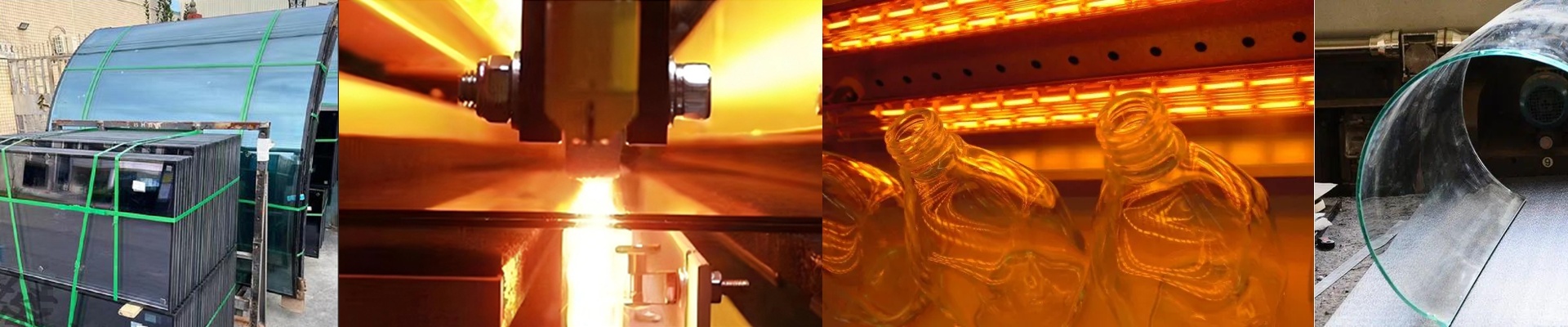
Scaling up a heating element isn’t as simple as just making it longer. Once you cross that 2-meter mark, things get messy. You start dealing with voltage drops and “thermal sagging,” where the heat just isn’t consistent. We don’t try to force one giant, fragile tube to do all the work. Instead, we use a modular array of high-wattage quartz lamps wired in parallel. It’s a much smarter way to do it. The glass gets a steady, uniform soak from one end to the other. Plus, if one lamp decides to quit, the rest of the line keeps humming along. You aren’t staring at a total shutdown over one burnt-out bulb.
The Nitty-Gritty Stuff
We use heavy-wall quartz glass because it can actually handle the way these long runs expand and contract. We also stick with short-wave infrared. Why? Because it punches through the glass surface way faster than the long-wave stuff. Installation can be a pain if the gear is flimsy. To stop lamps from snapping under their own weight or during a bumpy install, we use reinforced end-caps and brackets that actually fit. One heads-up on the power: these arrays are hungry. A 2-meter+ setup pulls a lot of current. We usually tell people to run dedicated circuits and use heavy-gauge wiring. You don’t want your control panel overheating because you tried to skimp on the wires.
Making it Work in Your Line
These units slide right into the preheating zone of your tunnel kiln. We overlap the lamps or stagger them so there are zero cold spots. By the time the glass reaches the cutting head, it’s exactly where it needs to be. Just a word of caution: this is a lot of heat in one spot. Make sure your ventilation can actually move that air out of the building. If the ambient heat builds up too much, you’ll start tripping the thermal sensors on your CNC electronics, and that’s a headache nobody wants.