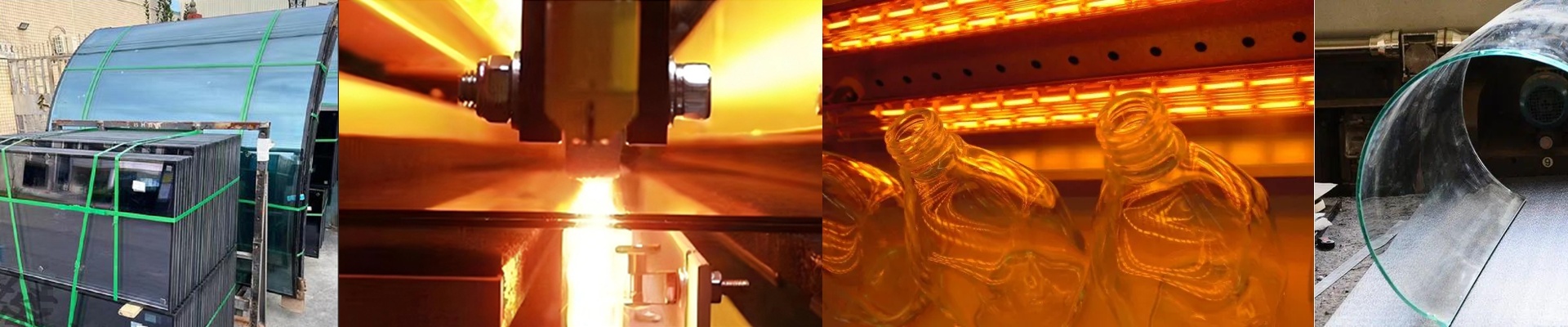
On a tempering line, the oven is the choke point when it pulls heavy power but still heats slow. Once you start lagging, everything else follows—coating cure goes uneven, bending cycles drift, and insulating glass seals start to feel sketchy. You watch energy bills climb while uptime takes a hit. What actually matters under the hood Quartz infrared lamps throw short-wave radiation that cuts into the glass fast, heating from the inside out instead of leaning on convection. That cuts thermal lag and gets you to setpoint sooner, with a tighter ramp. We match lamp power density and filament temperature to the process window so the oven hits setpoint quickly and holds steady. The quartz envelope handles thermal shock, and the compact shape sits clean in standard reflector geometry, keeping the thermal field even across the glass. Why this plays in glass processing Cycle time is the currency. Quartz infrared trims oven warm-up and soak, so tempering and bending lines squeeze in more batches per shift. Tighter temperature control keeps thermal stress down, which means fewer breakages and better optical quality. The lamps also dump energy straight onto the load, so less heat bleeds into the oven structure. In high-power heating, that shows up as lower kWh per square meter, lower peak demand, and a lower cost per part. Here are the practical details These lamps run hot, so they need clean, stable mounting—otherwise you get hot spots and you shorten their life. Check reflector alignment and cooling airflow, and confirm electrical compatibility at your voltage and connector. Plan inspections on a schedule. A lamp’s output drifts as it ages, before it finally fails. Replace in matched sets so emissivity stays consistent across the bank.