Fixing Those Annoying Dead Zones in Glass Annealing
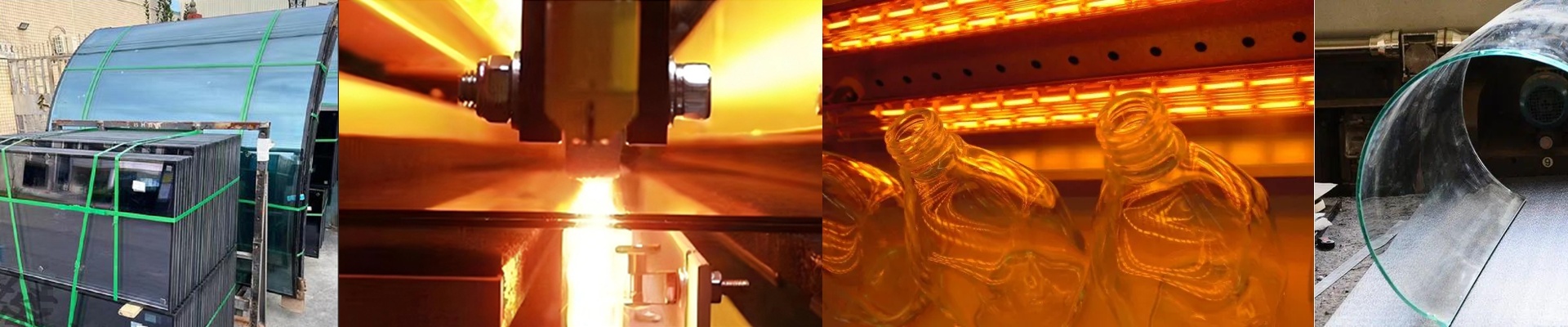
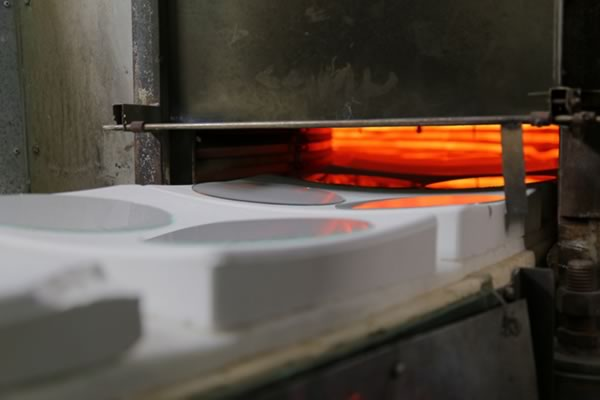
If you’ve ever worked with complex glass—think flasks, beakers, or weird custom labware—you know the nightmare of “dead zones.” You put your piece in a standard annealing lehr, everything looks fine, and then crack. It breaks spontaneously because the heat just didn’t reach the deep recesses or those narrow necks. Standard convection heating is just too clumsy for this. Air doesn’t like to go where it’s not invited. That’s why we use short-wave infrared (IR) lamps. Getting heat where it actually belongs Here’s the thing: air-based heating is like trying to warm up a room with a fan. IR is different. It travels in straight lines and hits the glass directly. We set up quartz halogen lamps in a multi-angle array—top, bottom, and sides. It’s basically a heat-bath. By surrounding the piece, we can hit those “shadow areas” where air currents usually just stall out and leave the glass cold. Speed and control (without the lag) We use lamps with a high wattage-to-length ratio. Why? Because we need the temperature to be exact. Short-wave emitters are incredibly snappy. When your controller asks for a temperature shift, the filament hits that mark in seconds. Compare that to ceramic heaters, which feel like they’re waking up from a nap before they actually start working. There’s just no lag. The gritty reality of the hardware We stick with quartz envelopes to make sure the IR actually gets through. Depending on how your plant is wired, you’ll probably be plugging these into 230V or 400V circuits. But a word of warning: these lamps put out a lot of energy. Not just at the glass, but at the sockets too. If you skimp on the cooling fans, you’re going to melt your reflectors or fry your wiring. It’s a trade-off you have to manage. Making it work in your shop The best part is that these lamps can just slide right into the spot where your old resistive elements used to be. Plus, you can actually shrink the size of your oven. You don’t need those massive air-circulation chambers taking up floor space anymore. You get a much tighter thermal profile, and more importantly, you stop throwing away so many rejected parts.