Getting the Heat Right in Train Glass
If you’re working with train window glass, you already know it’s a different beast than your standard float glass. Between the safety additives, the thermal insulation, and the UV protection, the chemistry is complex. Here is the problem: those additives change how the glass reacts to heat. If your IR lamps are pumping out wavelengths the glass just doesn’t “like,” the energy doesn’t soak in. It just bounces off the surface. You’re paying for the electricity, but the glass isn’t getting warm. That’s how you end up with uneven heating and a lot of frustration.
Matching the Lamp to the Glass
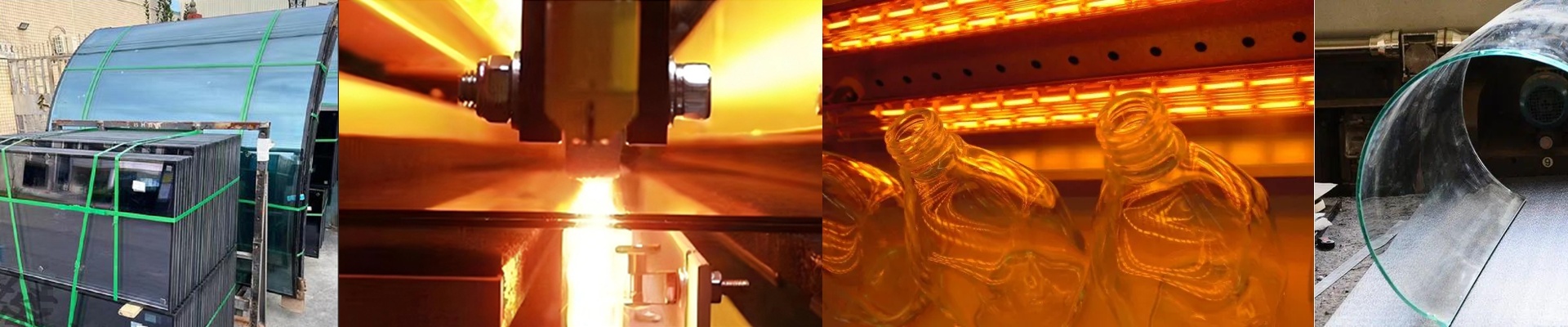
We don’t believe in “one size fits all” here. To actually get that heat deep into the glass, we tweak the infrared spectrum to hit those specific absorption peaks in your glass chemistry. We do this by messing with the filament materials and adding specific quartz coatings to shift the emission curve. Think of it like tuning a radio. When the frequency is exactly right, the glass just absorbs the energy. The ramp-up is faster. The temperature is steady across the whole pane. And most importantly, you stop dealing with those internal stresses that make glass crack while it’s cooling down. It’s a much smoother process.
The Real-World Stuff
Now, there’s a catch. To get this kind of precision, we often use narrow-band filters or specialized coatings on the quartz. They work great, but they’re a bit delicate. If your shop floor is a mess—lots of debris or chemical sprays flying around—these tubes can take a beating. You’ll want to make sure your shielding is tight. Keep the gunk off the coatings, or you’ll be replacing lamps way too often. Also, if you want to speed up your annealing cycle, we can crank up the wattage density. Just a heads-up: pushing more power into a smaller space puts a lot of stress on your power supplies. Double-check your electrical cabinets. You don’t want to be blowing fuses every time you flip the switch at start-up.
Why It Actually Matters
When the spectrum matches, those annoying “cold spots” just disappear. You stop fighting the physics of the material and start working with them. The result? Your cycle times drop. Your scrap pile gets smaller because you aren’t shocking the glass. It just works.