


The Secret to Glass That Doesn’t Just Shatter
Ever had a piece of lab glassware just… give up? One minute it’s fine, and the next it’s a pile of shards because of internal stress you couldn’t even see. It’s frustrating. Most of the time, it happens because the heating profile drifted by just a couple of degrees during cooling. That’s why we’re obsessed with 0.1°C precision. We use infrared (IR) elements to keep the glass locked right at its annealing point. No guessing.
Why that tiny fraction of a degree matters
Glass is picky. There’s a very narrow window where it’s happy. If you go a bit too hot, the piece starts to warp or deform. Too cold? The stress stays trapped inside the molecular structure, waiting for a reason to crack. To stop this, we pair high-response IR emitters with tight-loop PID controllers. It keeps the temperature flat across the whole vessel. No weird hot spots, no cold zones—just a steady, even heat.
IR vs. The Standard Oven
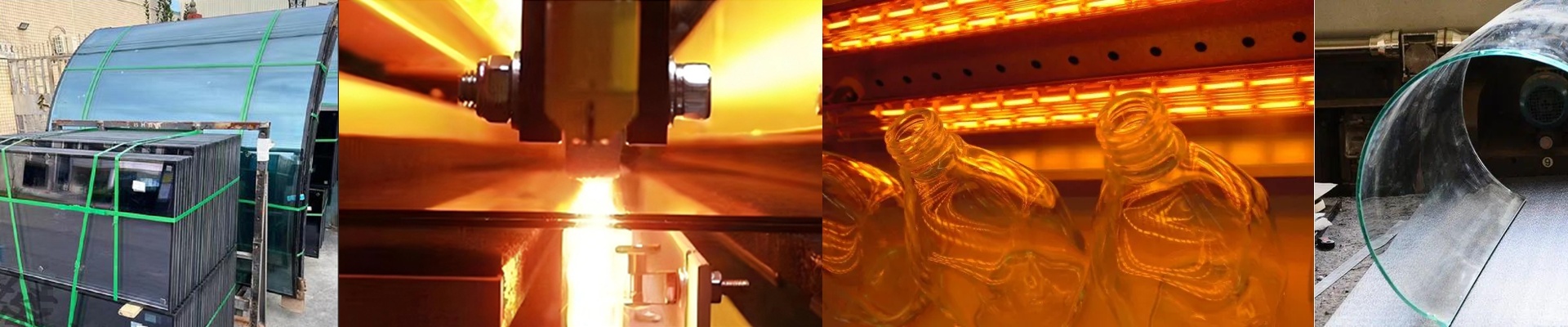
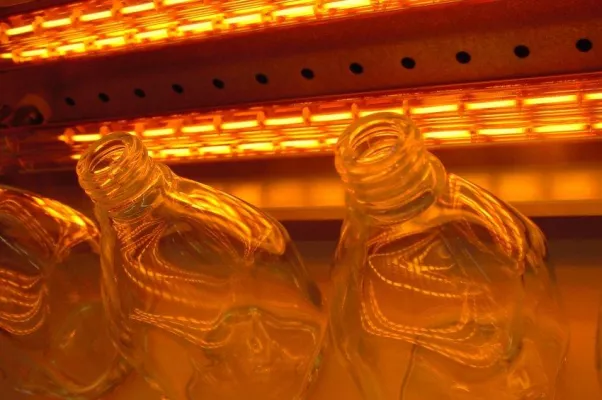
Think about a convection oven. It uses air, and let’s be honest, air is terrible at moving heat. IR is different. It uses radiation to hit the glass surface directly. It’s faster. Way faster. We use short-wave IR when we need to penetrate deep and medium-wave when we need the surface to stay stable. The trick is matching the wavelength to how thick your glass is. If you’re working with thick borosilicate, you need that deeper penetration. Otherwise, you get “skin-heating,” where the outside looks perfect but the core is still stressed and dangerous.
The messy reality of the engineering
Here’s the thing: high-precision IR isn’t just plug-and-play. If you just blast the lamp at 100% power, you’ll overshoot your target temperature every single time. To fix that, we use pulse-width modulation (PWM). Basically, we flicker the power at a high frequency to keep things steady. But there’s a catch. That constant flickering beats up your switching relays. If you use standard ones, they’ll burn out fast. You’ll want solid-state relays (SSRs) to handle the workload without quitting on you.